Commercial Vehicle Accident Cases Explained: What Makes Them Different in North Carolina
A tractor-trailer hit your car. Or a delivery truck ran a red light. Or a flatbed lost its load on I-40 and your vehicle took the impact.
You know the crash was not your fault. You know you are hurt. And you know the other side had a much bigger vehicle with a much bigger insurance policy behind it.
What you may not know yet is that commercial vehicle accident cases in North Carolina operate under an entirely different set of rules than standard car accident claims. Different regulations. Different liable parties. Different investigation requirements. And a state fault standard that can eliminate your right to compensation entirely if it is not handled correctly from the very first day.
This is what those differences look like, why they matter, and what Mogy Law does about them.
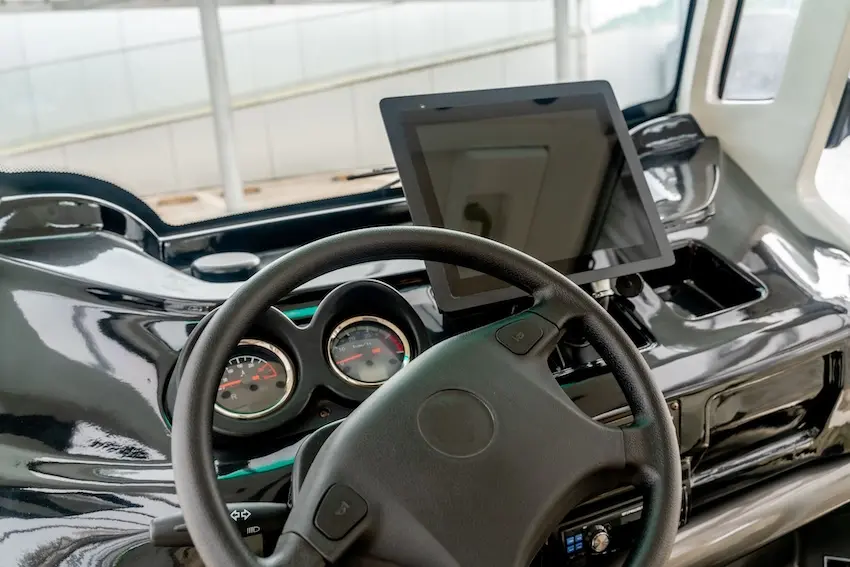
Commercial Vehicle Cases Are Not Car Accident Cases. Here Is Why That Distinction Changes Everything.
Commercial vehicle accidents look like car accidents at the scene. They are not. The legal landscape underneath them is significantly more complex, and the gap between handling them correctly and handling them like a standard fender-bender is the difference between full compensation and nothing.
What Makes a Vehicle “Commercial” Under the Law
Not every large vehicle involved in a crash qualifies as a commercial vehicle for legal purposes. The distinction matters because commercial vehicle status determines which federal regulations apply, what records must be maintained, and which additional parties may carry liability for the crash.
Under Federal Motor Carrier Safety Administration regulations, a commercial motor vehicle is generally defined as any vehicle used in interstate commerce that exceeds 10,001 pounds, transports more than eight passengers for compensation, or carries hazardous materials requiring placarding. This definition covers tractor-trailers, semi-trucks, flatbeds, tanker trucks, commercial delivery vans, dump trucks, and certain buses.
The FMCSA’s regulatory framework governs how these vehicles are inspected, maintained, loaded, and operated. It also governs how their drivers are hired, trained, and monitored. When a crash occurs, the question is not just whether the driver made a mistake. It is whether the company behind that driver violated any of the federal standards designed to prevent exactly this kind of crash.
The Federal Regulatory Layer That Standard Car Accident Cases Do Not Have
This is the most significant structural difference between commercial vehicle cases and standard auto accident cases. Commercial vehicle operators and the companies that employ them are subject to a comprehensive federal regulatory framework that creates specific, documentable duties of care.
Hours of Service Rules
FMCSA regulations strictly limit how many consecutive hours a commercial truck driver can operate a vehicle before mandatory rest is required. Drivers must maintain electronic logging device records documenting their driving time, on-duty time, and rest periods. When a fatigued driver causes a crash, those ELD records become critical evidence of regulatory violation.
Driver fatigue is one of the leading contributing factors in commercial truck crashes. A driver who exceeded their hours of service limit is not just negligent. They and their employer may have violated federal law, which changes how liability is argued and how damages are calculated.
Vehicle Inspection and Maintenance Requirements
Commercial vehicles are required to undergo regular pre-trip and post-trip inspections. Carriers must maintain detailed maintenance records for every vehicle in their fleet. Brake failures, tire blowouts, and equipment defects that cause crashes are often traceable to inspection records that were falsified, skipped, or ignored.
Driver Qualification and Training Standards
FMCSA regulations require commercial carriers to verify driver qualifications, maintain driver qualification files, and ensure their drivers hold the appropriate commercial driver’s license for the vehicle they are operating. When a carrier puts an underqualified or improperly licensed driver behind the wheel, that failure creates direct corporate liability.
Cargo Loading and Securement
Federal regulations specify how cargo must be loaded, distributed, and secured on commercial vehicles. An improperly loaded trailer can shift weight unexpectedly, causing the driver to lose control. Unsecured cargo that falls from a truck can cause multi-vehicle pileups. Both scenarios involve regulatory violations that extend liability beyond the driver to the carrier and potentially to the shipper.
Multiple Liable Parties: Why Commercial Crash Cases Are More Complex
In a standard car accident claim, liability typically runs to the at-fault driver and their insurer. In a commercial vehicle crash, the chain of liability can run through several parties simultaneously.
The driver carries individual liability for their own negligent acts, including speeding, distracted driving, fatigue, and impairment.
The trucking company or carrier carries liability for negligent hiring, inadequate training, failure to enforce hours of service compliance, and inadequate vehicle maintenance. This is often the most significant source of recovery in a serious commercial crash because corporate defendants carry substantially higher insurance limits than individual drivers.
The vehicle owner may be separate from the carrier in lease arrangements common in commercial trucking. Identifying whether the vehicle was owned, leased, or operated under an independent contractor arrangement affects which entity bears liability.
The cargo shipper or loader carries liability when improper loading or inadequate securement contributed to the crash.
The vehicle manufacturer or parts supplier may carry product liability when a mechanical defect contributed to the collision, including brake failure, tire defects, or steering component failure.
Identifying every liable party and pursuing every available source of recovery is one of the most important things a North Carolina commercial vehicle accident attorney does in the first days after a crash. Missing a liable party is not just a strategic failure. It can mean leaving significant compensation on the table.

North Carolina’s Fault Standard and Why It Makes Commercial Cases Even Higher Stakes
North Carolina follows one of the strictest fault standards in the country. Under North Carolina law, if an injured party is found to share any percentage of responsibility for the crash, even one percent, they are barred from recovering compensation entirely.
This standard makes commercial vehicle cases higher stakes in a specific and important way. Commercial trucking companies and their insurers know this rule. They use it aggressively. Their claims adjusters and defense teams begin building a comparative fault argument against the injured driver from the moment the crash is reported. They look for anything that can be used to argue shared fault and eliminate the claim entirely: a lane position, a speed, a turn signal, a prior driving record.
This is why it is so critical that your attorney is involved before you give any statements, before you accept any early settlement offers, and before you sign any documents the other side presents. The fault building starts immediately. Your defense has to start just as fast.
Eric Mogy and Chris Anglin have handled commercial vehicle accident cases across North Carolina. They understand how the fault standard is used as a weapon by commercial carriers and their insurers, and they build every case from the ground up to keep that argument from gaining any traction.
The Evidence in Commercial Cases That Disappears Fastest
Commercial vehicle accident cases involve a category of evidence that does not exist in standard car accident claims and that disappears on an extremely tight timeline if it is not actively preserved.
Electronic Logging Device data records driving hours and rest periods but is typically overwritten after a short retention window unless a preservation demand is issued immediately.
Dashcam and forward-facing camera footage from the truck cab may capture the crash itself but is often stored on overwriting systems with retention windows of days to weeks.
Event data recorder information from the truck’s onboard computer, sometimes called the black box, captures speed, braking, steering input, and other operational data in the moments before and during impact.
Driver qualification files and employment records may be altered or purged if not immediately preserved through legal demand.
Vehicle inspection and maintenance logs are subject to retention requirements under FMCSA regulations but can still be difficult to obtain without legal action.
When Mogy Law takes a commercial vehicle accident case, sending preservation letters to the carrier, their insurer, and any third-party maintenance providers is one of the first things we do. This evidence is the foundation of a strong commercial vehicle case and it cannot be rebuilt once it is gone. And in commercial vehicle cases, where recoveries are often substantial, the quality of that evidentiary foundation directly determines how much is ultimately recovered, which is precisely why the percentage your attorney keeps matters more than it does in a standard fender-bender.
The 25% Fee Difference in a High-Value Commercial Case
Commercial vehicle crashes frequently produce serious injuries, including traumatic brain injuries, spinal damage, multiple fractures, and long-term disability. The damages in these cases are often substantial. That means the difference between a 33% attorney fee and Mogy Law’s flat 25% contingency is also substantial.
On a $500,000 commercial vehicle settlement, the difference is $40,000 back in your pocket. On an $860,000 settlement, the kind Mogy Law has recovered in tractor trailer cases, the difference is nearly $70,000.
That is not a promotional point. It is arithmetic. And in cases where the recovery reflects genuine, serious injury, it matters enormously.
Frequently Asked Questions About Commercial Vehicle Accident Cases in North Carolina
What makes a commercial vehicle accident different from a regular car accident claim?
Commercial vehicle accidents involve federal regulatory oversight under FMCSA rules that do not apply to standard car accidents. Drivers and carriers must comply with hours of service limits, vehicle inspection requirements, driver qualification standards, and cargo securement rules. When those regulations are violated, liability extends beyond the driver to the carrier and potentially to other parties. Commercial cases also involve time-sensitive evidence, including ELD data, dashcam footage, and maintenance records, that must be preserved immediately or it is lost permanently.
Who can be held liable in a commercial truck accident in North Carolina?
Potentially multiple parties: the driver for their individual negligence, the trucking company for negligent hiring or inadequate training, the vehicle owner if separate from the carrier, the cargo shipper or loader if improper loading contributed to the crash, and the vehicle manufacturer if a mechanical defect played a role. Identifying every liable party is critical because commercial carriers carry substantially higher insurance limits than individual drivers, and missing a liable party means leaving recovery on the table.
How does North Carolina’s fault standard affect my commercial vehicle accident claim?
North Carolina follows a strict all-or-nothing fault standard. If you are found to share any percentage of fault for the crash, you recover nothing. Commercial carriers and their insurers use this rule aggressively, building fault arguments against injured drivers from the moment a crash is reported. This is why having an attorney involved before you give any statements or sign any documents is critical. Every interaction with the other side before your attorney is involved can be used to build a fault argument that eliminates your claim entirely.
What evidence should be preserved immediately after a commercial truck accident?
Electronic logging device data recording the driver’s hours, dashcam and forward-facing camera footage from the truck, event data recorder information capturing speed and braking inputs, driver qualification files and employment records, and vehicle inspection and maintenance logs. Most of this evidence is stored on overwriting systems with short retention windows. Preservation demands must be issued to the carrier within days of the crash or the evidence may be gone permanently. Mogy Law sends these demands as one of the first actions in every commercial vehicle case.
Why does the 25% contingency fee matter more in a commercial vehicle case?
Because commercial vehicle crashes typically produce more serious injuries and larger recoveries. On a $500,000 settlement, the difference between a 33% fee and Mogy Law’s 25% fee is $40,000 that stays with you rather than going to your attorney. On larger recoveries the difference is proportionally greater. In cases where the recovery reflects long-term injury, disability, or lost earning capacity, that difference is meaningful and it compounds across every dollar of your settlement.

What Mogy Law Does in a Commercial Vehicle Case
From the moment you contact us, we move on the evidence and the responsible parties simultaneously.
We issue preservation demands to the carrier before records are overwritten. We identify every liable party, including driver, carrier, owner, shipper, and manufacturer, and pursue every available source of recovery. We analyze the FMCSA compliance record of the carrier to determine whether a pattern of regulatory violations exists. We work with accident reconstruction experts and commercial vehicle specialists who understand truck dynamics, loading standards, and electronic systems. And we handle every adjuster communication from day one so that nothing you say can be used to trigger North Carolina’s all-or-nothing fault rule against you.
With a 4.7 Google rating across more than 100 client reviews and case results including an $860,000 tractor trailer settlement and a $485,000 commercial accident recovery, Mogy Law has the track record that commercial vehicle cases require.
Contact Mogy Law today for a free case evaluation. Learn more about how our North Carolina truck accident lawyers handle commercial vehicle cases from the first preservation demand through maximum recovery. Discover why North Carolina injury victims choose Mogy Law as their 25% lawyer.
Call (901) 443-9133 Free case evaluation. No fees unless we win. Available 24/7.